


Who's a good boy?


It's a pajamas in the front yard kInda morning. 🌞

Angels when chicken soup is cooking..

The remains of my couch 😡 Blueberry!!!
~ BLOG POSTS ~

Who's a good boy?
It's a pajamas in the front yard kInda morning. 🌞
Angels when chicken soup is cooking..
The remains of my couch 😡 Blueberry!!!

⭐ DARK HOLLYWOOD: PAYPHONES, BROKEN STREETS, AND THE MEN WHO WALKED THROUGH THEM
By Jim St. James
People dream about Hollywood.
They imagine stars on sidewalks, bright lights, limos, velvet ropes, movie premieres.
But if you came to Hollywood in 1987 with no money, no connections, and a pocketful of hope…
you didn’t step into a dream.
You stepped into a war zone with neon signs.
I lived in a curved-window apartment above Yucca and Wilcox — one of the darkest intersections in Hollywood at the time. Tourists never wandered there. Even the cops hovered but rarely stopped.
It wasn’t the Hollywood of movie posters.
It was the Hollywood of survival.
And I fit right in.
Not because I was brave.
But because I was from Gary, Indiana — a place that teaches you early how to read danger like a second language. I’d grown up dodging fights, gangs, attempted kidnappings. I’d learned to walk with one eye on every doorway and one hand ready for anything.
Hollywood didn’t scare me.
It felt like home.
People think Hollywood is all bright lights and red carpets.
But if you lived where I lived in 1987 — Hollywood had a different sound.
It hissed.
It shouted.
It rattled and groaned and sang out of tune.
It was a score written by ghosts and survivors, echoing off the cracked sidewalks.
And one night, I decided to record it.
My apartment sat on the top floor of a curved old building — the kind of structure that had seen so many decades it looked tired of standing. The paint was layered like tree rings, the carpets worn to threads, and the front door never locked. Anyone could — and did — walk right in.
But from my window, under the buzzing streetlight glow, I could see the real Hollywood stretching out around me. Not the boulevard of movie premieres. The other Hollywood — the one made of hunger, hustle, and hopeful souls running on fumes.
That night the air was warm and heavy, the kind of night where sound travels like breath. I set my little cassette recorder on the floor, pressed RECORD, and lowered the microphone out the window like a line dropped into the underworld.
It didn’t take long.
A man started yelling near Playboy Liquor — that sharp, familiar bark that always meant a deal had gone wrong or pride had gotten bruised. A bottle shattered. A car screeched, horn blaring while someone cursed loud enough for the whole block to hear. A shopping cart rattled over the sidewalks. Somewhere below, two people argued until the argument became a warning.
The mic picked it all up — like the street was speaking into it.
Then everything shifted.
A door slammed.
Someone ran.
A woman cried out — one sharp, terrified sound that hung in the air longer than it lasted. Thirty minutes later, an ambulance arrived.
The next day the buzz hit the street about the ‘stabbing', and the blood stained sidewalk marked the spot.
You didn’t need to see anything to understand.
Hollywood could be beautiful.
It could also be a place where hope collided with danger at 40 miles per hour.
Gary, Indiana had trained me for that long before Los Angeles ever did.
In Gary, you learned to read a street the way other kids learned to read books.
I wasn’t fearless — just familiar with fear.
But listening to the chaos through the microphone that night, I felt like I was documenting some secret truth about this strange life I’d stepped into that seemed so familiar.
I still have that cassette in my archives to this day. That was the sound of Hollywood at Yucca and Wilcox, nestled in the city of angels.
I went back to work that next morning at the Wax Museum, earning my $3.20 an hour with a new-found vision of what I wanted to do, and that's when I applied for, and was hired as a recruit in training with the Los Angeles Police Department, but that's a story for another blog post..
🚓🚔🚓
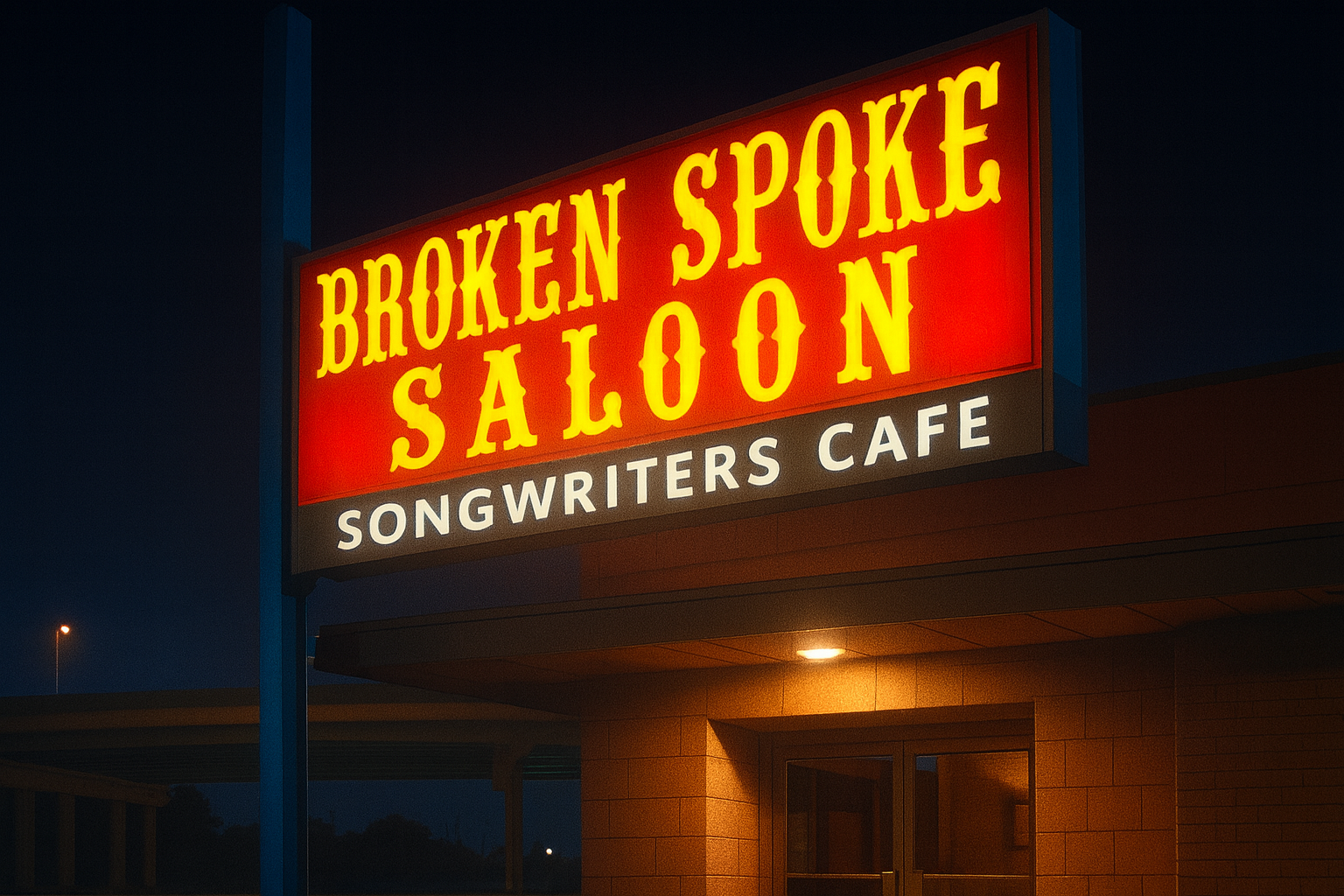
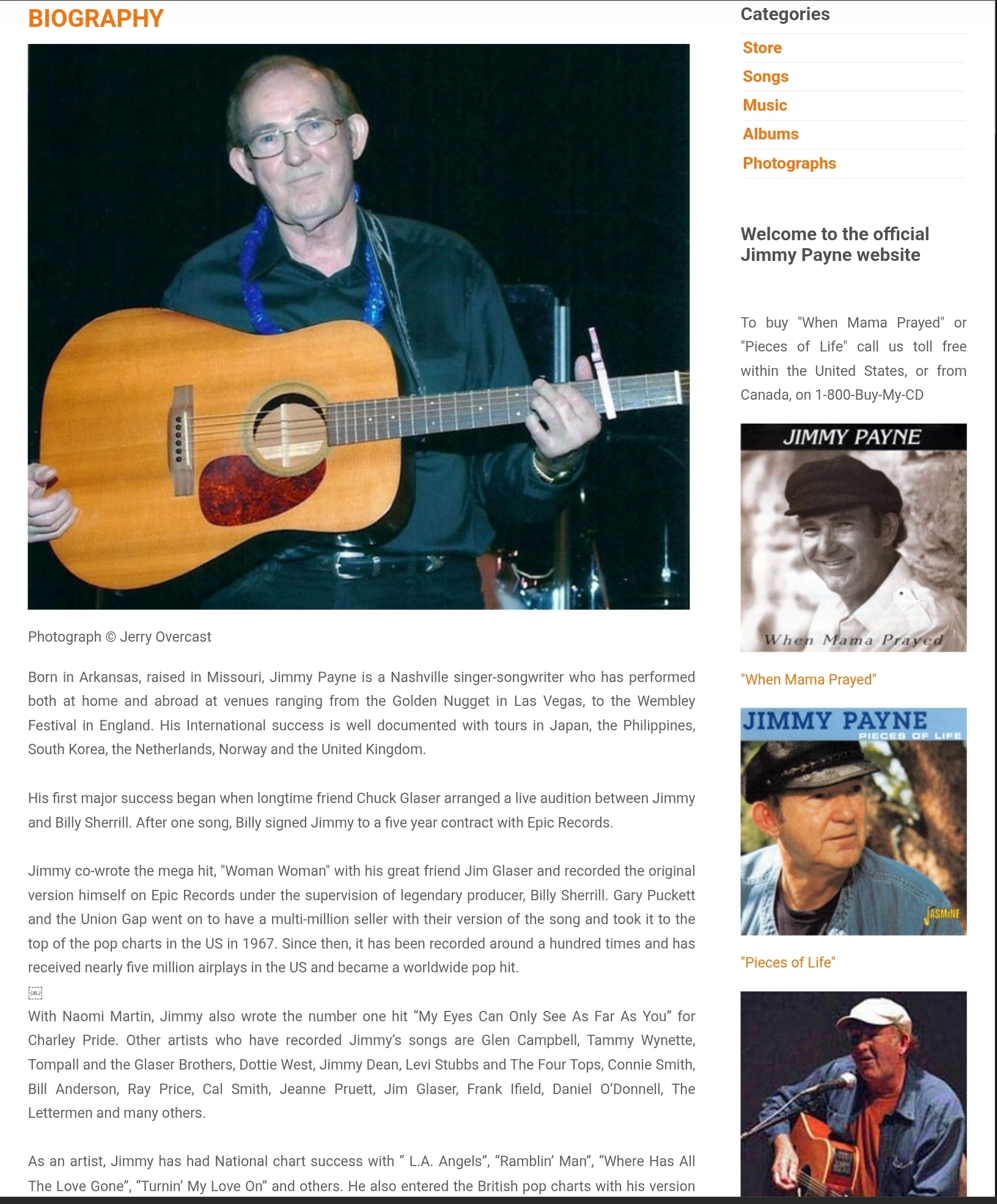
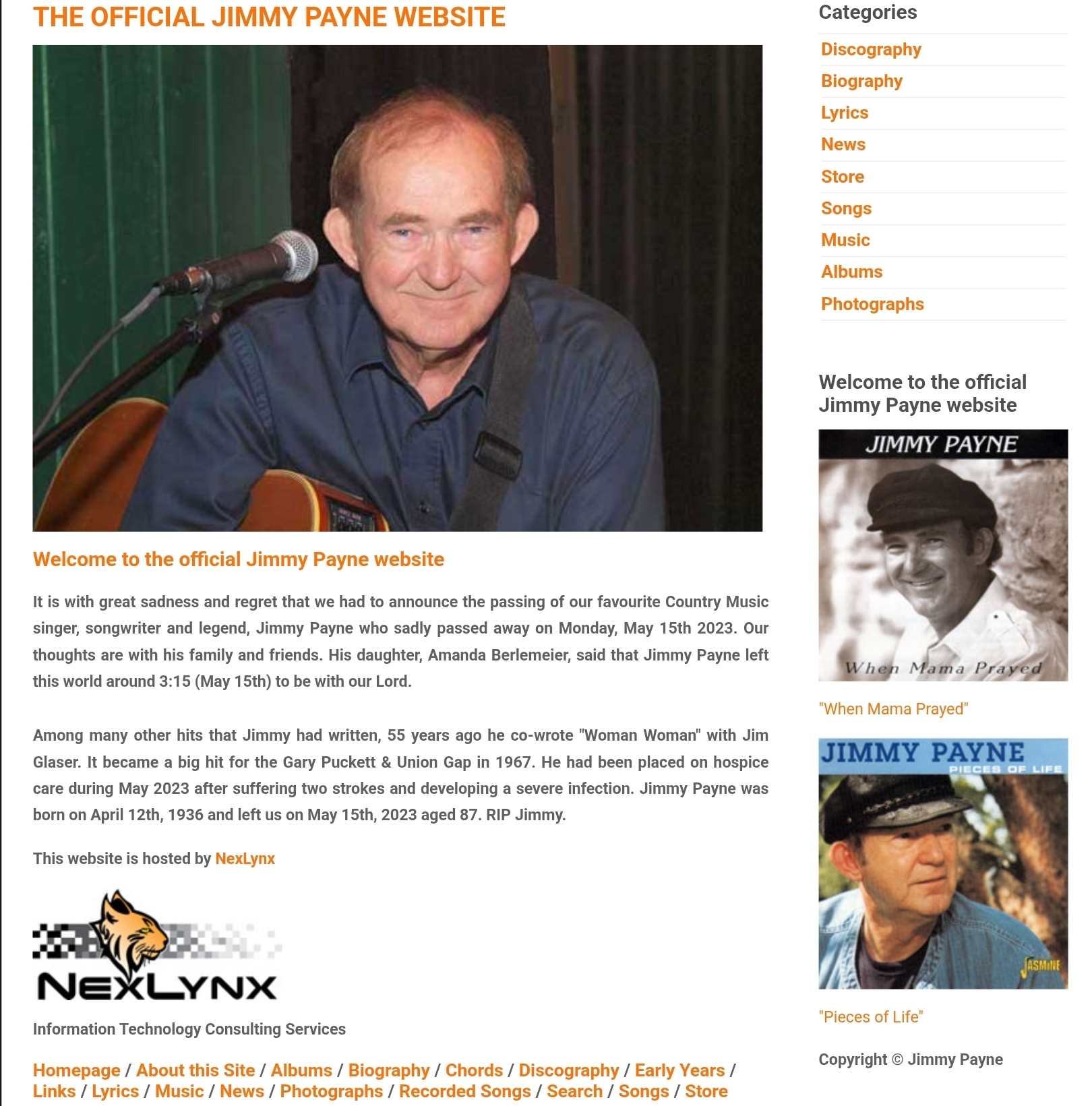
🎸 Jimmy Payne, The Broken Spoke, and the Night That Changed Everything
By Jim St. James
When I moved to Nashville in 1998, I didn’t just chase the dream — I jumped in headfirst. I lived six blocks from the old Broken Spoke on Brick Church Pike, tucked down a holler in Darin Pulse’s Musicians Lodge, a little 4 room writer-haven that housed hopefuls like me who lived off tips, demos, CD sales and pure determination.
Back then, Nashville was smaller, rawer, and far more intimate. And if you were a songwriter in those days, the Broken Spoke Songwriters Café wasn’t just a venue — it was church. A sanctuary. A proving ground. One of the most important songwriter rooms of its time.
It sat inside a hotel just off Trinity Lane, unglamorous from the outside, but inside? Inside it was where real Nashville happened. Night after night the room filled with guitars, sweat, cheap drinks, and some of the best lyricists on earth. Writers like Tony Lane, Reese Wilson, Larry Henley and so many others would hang out there, or visit there. The stage was close. The lights were warm. The applause was honest. I lived so close to it that for me, all roads led back to the Broken Spoke.
And if you played the Spoke often — as I did, sometimes multiple nights a week — you became part of a very real family of writers who lived the grind instead of just visiting it.
~ Debi Champion: The Beating Heart of the Scene ~
One of the pillars of the entire Nashville songwriting community — then and now — was Debi Champion. Her hosting nights at the Broken Spoke were legendary.
Debi didn’t just run a writers round.
She mentored people.
She believed in people.
She created safe spaces where young writers could sharpen their craft, get back up after flops, and discover their voice.
She later took that same spirit to the Commodore Lounge in the Nashville Holiday Inn, where she still continues to host one of the city’s most important songwriter nights. In a world where many hosts come and go, Debi has remained the gold standard — a champion in every sense.
It was on her night — one packed wall to wall — that I played a set right before the legendary Jimmy Payne.
~ The Moment ~
Jimmy Payne wasn’t just another writer.
He was the man who co-wrote “Woman, Woman”, the massive hit made famous by Gary Puckett & The Union Gap in 1968. A song that lived in the DNA of anyone who grew up loving great songwriting.
I grew up hearing it on the back-dash speakers of my dad’s old Chevy — blaring through the car as we drove Indiana backroads. My dad, an amateur drummer, loved that era of music. Roger Miller. Glen Campbell. The Union Gap. The songs that shaped America.
So to be playing on the same bill as one of those writers — and with him standing right outside the green room listening — was something else.
The Spoke was completely full that night.
Not a chair open.
The kind of crowd that turns a simple writers set into a memory you never forget.
I stepped onto the stage — alone, not in the round — and played four songs. The room was warm and the audience supportive. But inside? I was sweating bullets. That old kind of nervous only big rooms or big moments can trigger.
As I walked offstage after my set toward the green room, audience still clapping and Debi Champion introducing Jimmy, he was walking toward the stage, his guitar strapped over his shoulder.
He stopped.
And he looked me straight in the eye.
~ The Advice That Changed Everything ~
“Son,” he said, “you had a great set. But you looked a little nervous.”
My heart sank.
I thought — damn it, he saw it.
Then he smiled and said something that I can still hear today:
> “Half the people are gonna love you.
Half the people may not.
So why be nervous?
It doesn’t matter.
Just get up there and do your thing.”
It hit me like a revelation.
Jimmy slapped me on the back and said,
“You’re damn good. Keep at it.”
I told him about sitting in my dad’s Chevy as a kid, listening to his song.
He grinned and said,
“Then play ‘em for your dad. And remember what I said.”
Jimmy walked out there and tore the place apart with “Woman, Woman” and his other classics. The kind of performance only a man who’s lived the songs can deliver.
And that night — in a smoky hotel bar on Brick Church Pike — something inside me shifted forever.
~ The Turning Point ~
After that moment, I never felt stage fright again.
Not in big rooms.
Not on showcases.
Not on live streams.
Not on festival stages.
Not anywhere.
Jimmy Payne flipped a switch inside me that night.
He pushed me across the invisible line between amateur and professional — the “before” and “after” of every performing artist’s journey.
And for the rest of my years in Nashville, I carried his words with me.
I still do.
I went on to share his advice with other nervous performers at the Broken Spoke, the Bluebird, Douglas Corner, The French Quarter, and every other room where I earned my stripes. His simple sentence became part of my DNA as an artist.
~ Goodbye to a Legend ~
Jimmy Payne passed away in 2023 at the age of 87.
But his songs — and the kindness he showed a young songwriter on Trinity Lane — live on.
And the Broken Spoke — though closed now — lives on too.
In stories.
In memories.
In the hearts of the songwriters who practically lived there, just like I did.
A hotel bar on Brick Church Pike where so many of us learned who we were, and where I learned who I could become.
Thanks, Jimmy.
You set me free that night.
And I never forgot it.

✨ The Day Steven Spielberg’s Chimney Saved My Life
By Jim St. James
Back in 1987–88, during my time working at Universal Studios, I had one of those only-in-Hollywood experiences you never forget — the kind that becomes part of your personal mythology, whether you want it to or not.
At the time, Amblin Entertainment — Steven Spielberg’s headquarters — was located on the front lot of Universal. It was a beautiful little complex, warm and welcoming, with immaculate landscaping, quiet courtyards, and nannies caring for employees’ children as they played outside. It felt more like a small creative village than a studio office.
Oddly enough, the gardening crew for Amblin had a reputation on the lot:
> If you weren’t Italian, you pretty much had no shot at getting hired there.
It was one of those strange bits of studio folklore that everyone knew and accepted. The long-time contract gardener was an older Italian gentleman, a Universal fixture who had held that assignment for years. And when he went on vacation, the studio labor foreman, Ward Lathrope, needed someone to fill in.
Ward looked at me — an Italian — and said:
“You’re going to Amblin.”
Just like that, I had one of the most coveted gardening jobs on the entire lot if not in southern California.
My first day felt almost surreal. I showed up early, ready to prove myself. I watered the flower beds, tended the lawns, and walked the grounds — and there, right in the middle of it all, was Steven Spielberg himself, moving in and out of the offices like any other employee. He was kind, approachable, and as normal as someone of his stature could be.
Before long, his staff asked me to take care of the leaves clogging the gutters on the Amblin roof. That Mr. Spielberg had been wanting this done.
Under normal circumstances, that was no big deal. The roof wasn’t flat, but it wasn’t treacherous either — a gentle slope, shaded by huge magnolia trees whose thick leaves were the main culprits.
I climbed up with my tools and got to work.
About an hour in, something strange happened.
My legs suddenly felt weak — rubbery — like they might give out. I felt disoriented, almost dizzy, as if someone had pulled the ground out from under me. In that moment, I genuinely thought I might be having some kind of medical episode.
Before I could understand what was happening, the roof began to move.
Not dramatically — but just enough to throw off my balance.
I lost my footing and nearly slid off the edge, straight toward the metal trash hopper I’d been dumping leaves into below. Instinct kicked in. I reached out blindly, grabbed hold of the chimney coming up from the building, and wrapped my legs and arms around it like it was the only solid thing in the world.
A few seconds later… everything stopped.
The dizziness faded. The roof steadied. My legs returned.
I crawled slowly — carefully — across the shingles, reached the ladder, climbed down, and sat on the edge of a concrete planter, trying to catch my breath.
Right then, the Amblin staff — a group of women who’d seen the whole thing — came running out of the building shouting,
“Are you okay?!”
I nodded, still confused.
They said,
“Thank God. That was a 3.9 earthquake centered in the Valley. We thought you were going to fall!”
I had never been in an earthquake before.
I had no idea what one even felt like.
What I thought was a medical emergency was actually the earth rolling under my feet.
Suddenly everything made sense — the weak legs, the strange sensation, the loss of balance.
And all I could think was:
I almost fell off the roof of Amblin Studios during an earthquake!
Needless to say, the next morning I requested a different assignment. As great as that job was — and it truly was a cushy, once-in-a-lifetime studio gig — I wasn’t about to tempt fate with another tremor. They reassigned me to a strike crew that very day, tearing down the Back to the Future sets on Universal's courthouse square.
But that moment stays with me.
A near fall.
My first earthquake.
Spielberg walking the lot.
And me — a 27-year-old kid — clinging to a chimney like my life depended on it.
Because that day at Universal Studios,
it did, as that was the day that Steven Spielberg’s chimney saved my life.

✨ My First Christmas in Hollywood 🌲 (1987)
By Jim St. James
I moved to Hollywood in July of 1987, young, hopeful, and wide-eyed — a newcomer with a musician’s heart and a head full of dreams. My little apartment on Highland Avenue wasn’t much, but the view from my veranda felt like standing in the heartbeat of the world. From there I could see the glow of Grauman’s Chinese Theatre and even the spires of the old “War of the Worlds” church. To a young man from Indiana who loved music and movies, it was everything.
I was working days then as the box office guy at the Hollywood Wax Museum — the same museum owned by the legendary Spoony Singh. I’d watch tourists trickle in, and watch the buzz of Hollywood Boulevard outside, and occasionally see real celebrities visit when a new wax figure was unveiled, especially the pieces by famed wax crafter, Logan Fleming. I also picked up two night shifts a week at the famous Pussycat Theatre, which added its own unique charm to my early Hollywood baptism. I laughed about that job even then — only in Hollywood could your work week include both the Wax Museum and the Pussycat. On the weekends, as a side hustle, I did several crowd scenes as a movie extra. I seriously thought about joining the extras union and giving a crack at acting, but my true love was music.
I was off the night it happened. I had planned something simple: a short walk up to Hollywood Boulevard to grab a bite to eat at “Two Guys From Italy,” a small restaurant I often went to after work. But when I stepped out of my apartment and turned toward the boulevard, I noticed the glow — the lights, the reflected reds and greens dancing against the buildings — and I heard the unmistakable sound of a crowd.
The Hollywood Christmas Parade was in full swing.
I followed the lights, letting the music and the energy pull me toward the boulevard. The parade was slowing right at the moment I reached the curb. And suddenly, right in front of me, in a burst of color and southern California winter glow, sat two American icons.
Betty White, radiant, warm, smiling as if she were greeting old friends.
And beside her, high on the float, bundled but unmistakable, was Jimmy Stewart — the same man whose voice and spirit carried one of my all-time favorite Christmas films, It’s a Wonderful Life.
Seeing him in person — in a Christmas parade, no less — felt like walking right into the movie.
The float slowed to a near stop, and without even thinking, I leaned on the float and called out,
“Merry Christmas!”
And to my disbelief, both Betty White and Jimmy Stewart turned, smiled, and wished me a Merry Christmas in return. Stewart was in his late seventies then, still dignified, still gentle, the kind of man whose presence felt like a warm handshake. Betty White was a burst of brightness — gracious, golden, timeless even then.
In that moment, under the lights of Hollywood Boulevard, surrounded by the hum of cameras and carols, I felt like I was exactly where I was supposed to be. A young musician in the heart of Hollywood, standing just steps from my apartment, talking to the very people whose work had shaped so many American memories.
Hollywood was still beautiful then. Still magical. And for me, in that single moment in 1987, the city opened its arms and welcomed me in a way I’ll never forget.
It wasn’t just a parade.
It was my first Christmas in Hollywood —
and the night Jimmy Stewart and Betty White wished me a Merry Christmas.
A moment of pure magic during a time when the city still shimmered with possibility and the air itself held the nostalgia and the mystique of a golden age graced by golden memories.
A memory I will never forget.
Here's to you and yours this HOLIDAY SEASON.


From the LA Times:
If you love a parade, get ready!
The oldest, biggest and flashiest is the Hollywood Christmas Parade, which begins at 6 p.m. This 56th edition of the annual parade stars Jimmy Stewart as grand marshal and 90 other film, television and recording artists.
There are 19 floats, 51 cars, 16 bands and 12 equestrian groups--with a total of 2,858 people participating in the Hollywood parade.
Stewart, serving as grand marshal for the second time in 10 years since the reorganization of the event, said he signed up for this tour of duty because he feels that the parade “represents all the glamour and all the good things that the movie business has accomplished over the years.
“I think this year’s parade is especially important because of this positive-image program that has been going on for some time now,” he added. “To make Hollywood a place to be proud of and develop Hollywood’s old style again. I’ve always had a feeling about it. There’s always been something special about it, this place where pictures originated.”
Stewart admitted that he thought “today’s actors and actresses shy away a little from this type of thing. I don’t think they have the feeling about Hollywood we had in the old days.”
~